
Composite bonding in London’s E20
Revamp your smile with dental composite bonding at My E20 Dentist. The straightforward and efficient solution for correcting chips, gaps, and stains.
Same-day results, carried out by our restorative dentists, with 0% finance available on larger smile plans.
- Minimally invasive and affordable
- Fix chips and broken teeth and fill gaps
- Improve the appearance of your smile

What it is
A simple, effective way to rebuild your smile
Composite bonding can conceal tooth imperfections and give you a swift smile transformation. The treatment involves applying a tooth-coloured composite resin to the surface of your tooth, and is commonly used to address issues like chips, cracks, gaps, and discolouration. Composite bonding can also be used to reshape teeth and fill visible cavities, with no drilling and in just one trip to the dentist.
Composite bonding can help to:
- Improve your oral health in general
- Fix teeth that are chipped or cracked
- Disguise discolouration and staining on your teeth
- Improve tooth function and digestion


How we do it
How we do composite bonding, step by step
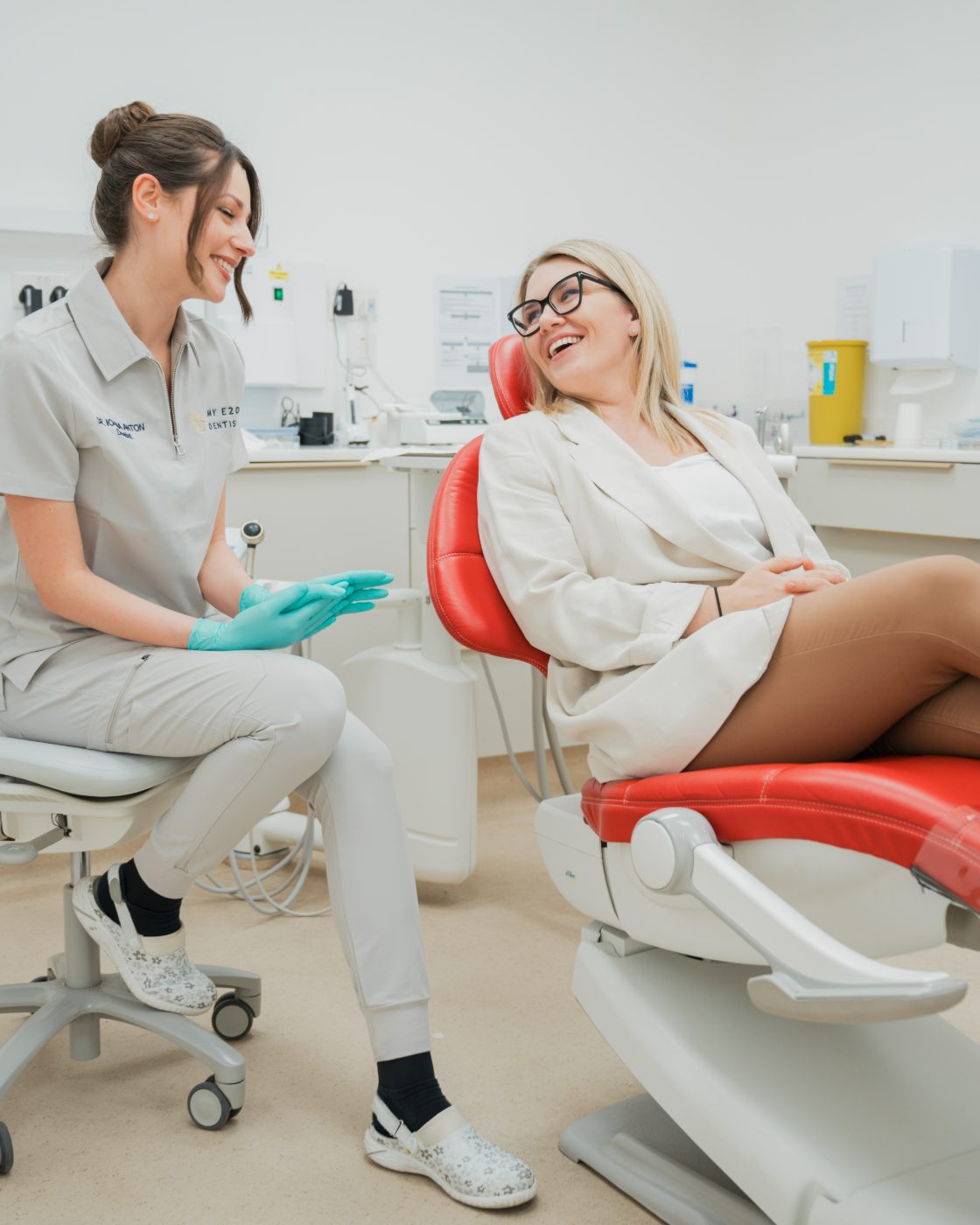
In short, we plan the shape and shade, prepare and bond the tooth, build the composite up in thin layers, then sculpt and polish it to match the teeth around it. You will not see any of this while you are in the chair, so here is what each step involves and why it matters for how natural the result looks and how long it lasts.
It is the same treatment you will read about anywhere. The difference is in how carefully each of these steps is done.
Planning your smile
Before we touch a tooth, we look at the shape of your face, your other teeth and the way your smile sits when you talk and laugh. Bonding that ignores this can look added on, so we treat the planning as the most important part of the whole treatment. We plan the shape and shade first, so the result belongs to your face rather than sitting on top of it, and we talk you through what we're proposing so you know exactly what to expect before we begin.
Choosing the shade and the material
We select the composite by eye in natural light, often layering more than one shade so the tooth has depth rather than looking flat. Real teeth aren't a single solid colour - they're slightly more translucent at the edge and warmer near the gum - and matching that is what makes bonding disappear into your smile. The right material in the right place is what stops bonding looking like a block of filling, and it's a big part of why the result still looks natural years later.
Preparing the surface
We gently clean and condition the tooth, then apply a mild etch. This micro-roughens the enamel so the bond grips properly, giving the composite a surface it can lock onto rather than simply resting against. A clean, dry surface at this stage is the single biggest factor in how long bonding lasts, which is why we take our time here even though it's the part you'll notice least.
Applying the bond
We apply a thin bonding layer and set it with a curing light. This is the foundation the composite holds onto, and getting it right is what turns a temporary-looking repair into something durable. A careful seal at the join is what stops staining creeping in at the edges later, so we pay particular attention to the margin where the bonding meets your natural tooth - the area that tends to give cheaper work away over time.
Building the tooth in layers
We add the composite in thin layers, curing each one before the next. Building it up gradually, rather than in one lump, lets us shape it accurately and control exactly where the material sits. It also reduces stress in the material as it sets, which helps it last and lowers the chance of it chipping down the line. It's slower than a single application, but it's the difference between a tooth that's rebuilt and one that's merely filled.
Sculpting the shape
We contour the surface to follow the natural anatomy of a tooth - the slight ridges, the gentle curve, and the way light catches the edge. This is the part that separates a natural result from an obvious one, and it's done entirely by hand and by eye. We shape each tooth so it sits in proportion with the ones beside it, so your smile looks balanced rather than like a set of matching tiles.
Checking your bite and polishing
We check how the tooth meets the ones above and below and adjust until it feels right, so the bonding isn't knocked or chipped when you eat or when your teeth come together. Getting the bite correct is what protects the work long term - bonding that's slightly too high wears or breaks far sooner. Once it feels comfortable and natural, we polish it to a natural shine and seal the margins, leaving you with a finished tooth that both looks and functions like your own.
Real experiences from real patients
The best way to understand what we’re like is to hear from the people who’ve been here. Here’s what our patients have to say about their experience with us.

I had a really positive visit today. The dentist took the time to explain the treatment in detail and made sure I understood everything. The clinic has a lovely, calm atmosphere, and the nurses were friendly and supportive throughout. I felt well looked after.
mirela catalina mut
I was very pleasantly impressed by this clinic, starting from the ease with which I made the appointment to the courtesy of the receptionist to guide me to find the address. The clinic is very clean, well equipped and the doctor very good, finding a solution for the dental problem. I strongly recommend this dental clinic.
Marinela A.
I am very satisfied with the services at this clinic and especially with Dr. Andreea Pop. She was professional, kind, and very attentive. She explained everything clearly and made me feel comfortable and confident. She helped me a lot, I highly recommend Dr. Andreea Pop and this clinic.
Petrache R.
It was a very pleasant experience, the clinic staff was very nice and kind to the patients, the waiting time was very short. It was a very nice experience and I would gladly come back whenever needed.
Ioana G.
I recently visited MY E20 Dentist and had a very positive experience. The staff were welcoming, professional, and made me feel comfortable from the moment I arrived. The dentist explained everything clearly and took the time to answer all of my questions, which really helped put me at ease.
Sorin B.
Frequently asked questions
Composite bonding is suitable for most people who have minor cosmetic imperfections in their teeth. However, it may not be recommended for individuals with extensive damage or those seeking a more permanent solution. Your dentist will discuss your suitability for composite bonding with you, during your first consultation.
Composite bonding can last anywhere from 5 to 10 years or more with proper care and maintenance. However, the lifespan of bonding may vary depending on factors such as oral hygiene habits and your diet.
Composite bonding is considered one of the most reversible cosmetic treatments available. In most cases little or no enamel is removed, and the material can be replaced or removed by your dentist if needed.
Composite bonding does not require any special care beyond regular oral hygiene practices such as brushing, flossing, and routine dental visits. However, it is important to avoid habits that could damage the bonding material, such as biting on hard objects or chewing on ice.
Composite bonding materials are resistant to staining, but they may become discoloured over time, especially if exposed to foods and drinks that cause staining. Maintaining good oral hygiene and avoiding staining agents like tea, coffee, red wine and tobacco can help prolong the lifespan of your composite bonding.
We offer 0% APR payment plans for treatments over £1000. You can spread the cost over up to 12 months, making it easier to manage your dental care expenses. Speak to one of our team members for further information.
Most composite bonding appointments take between 30 minutes and 2 hours, depending on how many teeth are being treated. The full result is usually achieved in a single visit, with no need for laboratory work or follow-up appointments to complete the treatment.
The cost of composite bonding at My E20 Dentist depends on how many teeth are being treated and the complexity of the work. You'll receive a clear, written quote at your consultation, and 0% finance is available for treatment over £1,000 to help spread the cost.
Composite bonding is one of the safest cosmetic treatments available, but it does have limitations. The material can chip if you bite into very hard foods, and it doesn't resist staining as well as porcelain veneers over the long term. It also can't correct heavy crowding, large gaps, or severely worn teeth on its own, in which case your dentist may suggest alternatives such as orthodontics first, or veneers. Any small chips or wear in the bonding can usually be repaired without redoing the whole treatment.
No. The procedure is minimally invasive and usually doesn't require any anaesthetic at all. Most patients describe it as completely comfortable, similar to having a small polish or filling.
Straight away. Composite bonding is one of the few cosmetic treatments that delivers full results in a single visit. You'll walk out with your new smile the same day, with no waiting, no temporary stage, and no follow-up appointments needed.
Yes. Many patients combine composite bonding with teeth whitening to even out the colour of their smile before the bonding is matched, or with clear aligners to straighten the teeth first and then refine the shape with bonding. Your dentist will plan the order of treatment carefully at your consultation so the final result is exactly what you're after.
Book a consultation in London’s E20
Ready to start on your dental journey? Take the first step by scheduling an initial consultation at My E20 Dentist. We’ll explore your options for restoring your smile and help you take the next steps towards achieving your dental goals.


